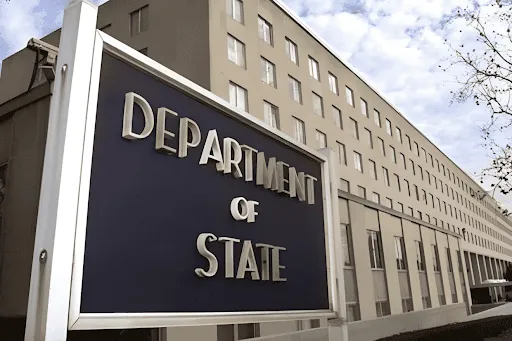
United States: State Department Pauses Immigrant Visa Issuance for 75 Countries During Public Charge Review
By Orelmy Díaz, Esq.
The U.S. Department of State has announced an indefinite pause on the issuance of immigrant visas for nationals of certain countries while it reassesses how consular officers apply the public charge ground of inadmissibility. The policy takes effect January 21, 2026, and is expected to cause significant delays for affected families.
Importantly, the pause applies only to the issuance of immigrant visas, not to the acceptance of applications or the scheduling of interviews.
What Is an Immigrant Visa?
An immigrant visa is a visa issued by a U.S. embassy or consulate abroad that allows a foreign national to enter the United States as a lawful permanent resident (green card holder).
Immigrant visas are commonly used for:
Family-based green cards
Employment-based green cards
Diversity Visa (DV) lottery cases
Certain humanitarian or special immigrant categories
Once a person enters the United States using an immigrant visa, they become a lawful permanent resident and later receive their physical green card.
Immigrant visas are processed by the Department of State through U.S. embassies and consulates overseas.
Does This Affect People Applying for a Green Card Inside the United States?
No. This pause does not affect individuals applying for a green card from within the United States through adjustment of status.
Applicants who file Form I-485 with U.S. Citizenship and Immigration Services are not subject to consular processing and are therefore outside the scope of this policy. Adjustment of status cases are handled by the U.S. Department of Homeland Security, not the Department of State.
Countries Subject to the Immigrant Visa Issuance Pause
Effective January 21, 2026, the Department of State will pause the issuance of immigrant visas to applicants who are nationals of the following countries:
Afghanistan, Albania, Algeria, Antigua and Barbuda*, Armenia, Azerbaijan, Bahamas, Bangladesh, Barbados, Belarus, Belize, Bhutan, Bosnia, Brazil, Burma*, Cambodia, Cameroon, Cape Verde, Colombia, Cote d’Ivoire**, Cuba**, Democratic Republic of the Congo, Dominica**, Egypt, Eritrea*, Ethiopia, Fiji, Gambia**, Georgia, Ghana, Grenada, Guatemala, Guinea, Haiti*, Iran*, Iraq, Jamaica, Jordan, Kazakhstan, Kosovo, Kuwait, Kyrgyzstan, Laos*, Lebanon, Liberia, Libya*, Macedonia, Moldova, Mongolia, Montenegro, Morocco, Nepal, Nicaragua, Nigeria**, Pakistan, Republic of the Congo*, Russia, Rwanda, Saint Kitts and Nevis, Saint Lucia, Saint Vincent and the Grenadines, Senegal**, Sierra Leone*, Somalia*, South Sudan*, Sudan*, Syria*, Tanzania**, Thailand, Togo**, Tunisia, Uganda, Uruguay, Uzbekistan, and Yemen*.**
* Currently included on a full travel ban list
** Currently included on a partial travel ban list
Dual nationals applying for an immigrant visa using a passport from a country not listed above are exempt from the pause.
What Applicants Can Expect During the Pause
During the suspension:
Immigrant visa applications may still be submitted
Interviews will continue to be scheduled and conducted
Consular processing will continue
No immigrant visas will be issued, even if the applicant is otherwise eligible
Previously issued immigrant visas have not been revoked as part of this policy.
Background: Public Charge Review
Public charge is a statutory ground of inadmissibility that requires the government to assess whether a foreign national is likely to become financially dependent on the U.S. government in the future. The law requires a totality-of-the-circumstances analysis, which may consider factors such as health, age, education, skills, and financial resources.
Public charge determinations are individualized and case-specific, and no single factor is determinative. Immigrant visa applicants have historically been subject to more extensive public charge review than nonimmigrant visa applicants.
What This Means for Immigrant Families
For many applicants, this pause adds uncertainty after years of waiting, documentation, and family separation. While applications remain active, final approval will be delayed until the Department of State completes its reassessment and resumes immigrant visa issuance.
Affected applicants should continue to:
Monitor official communications from the Department of State
Attend scheduled interviews unless instructed otherwise
Seek legal guidance to preserve their case and explore available options
We are actively tracking how the State Department is implementing this policy and will continue to share updates as further guidance or changes are announced.
This article is for general informational purposes only and does not constitute legal advice.